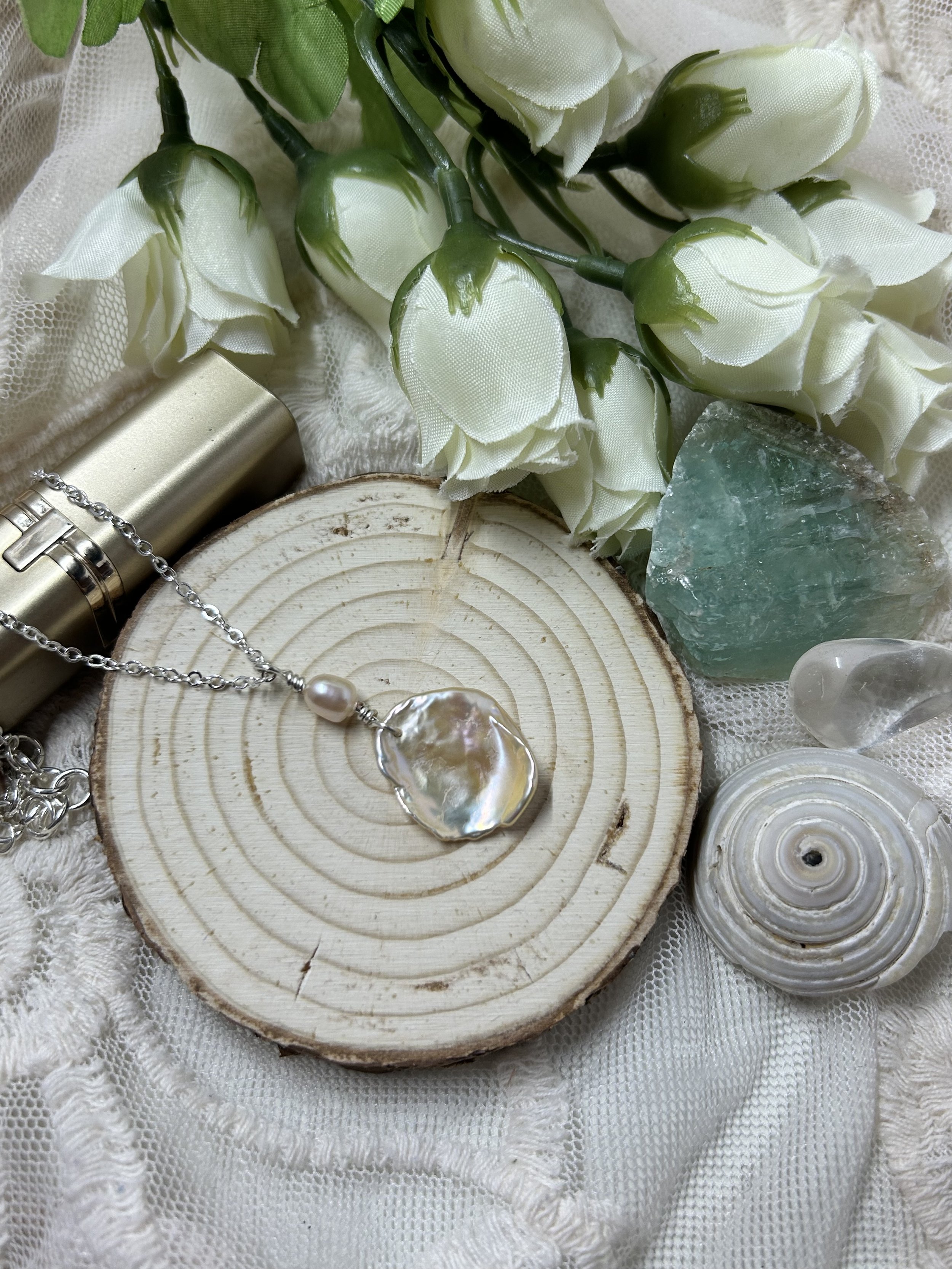
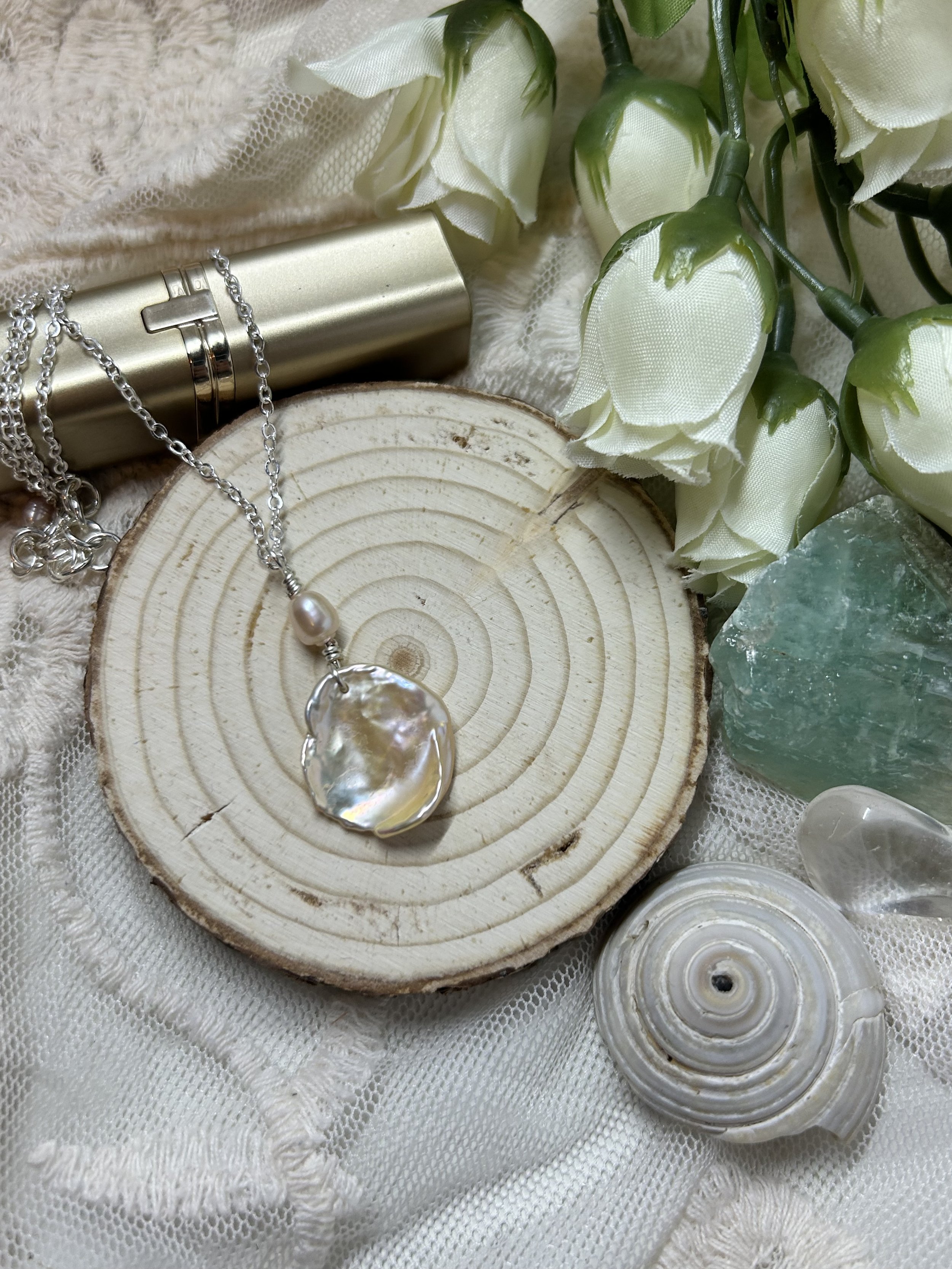
 Image 1 of 2
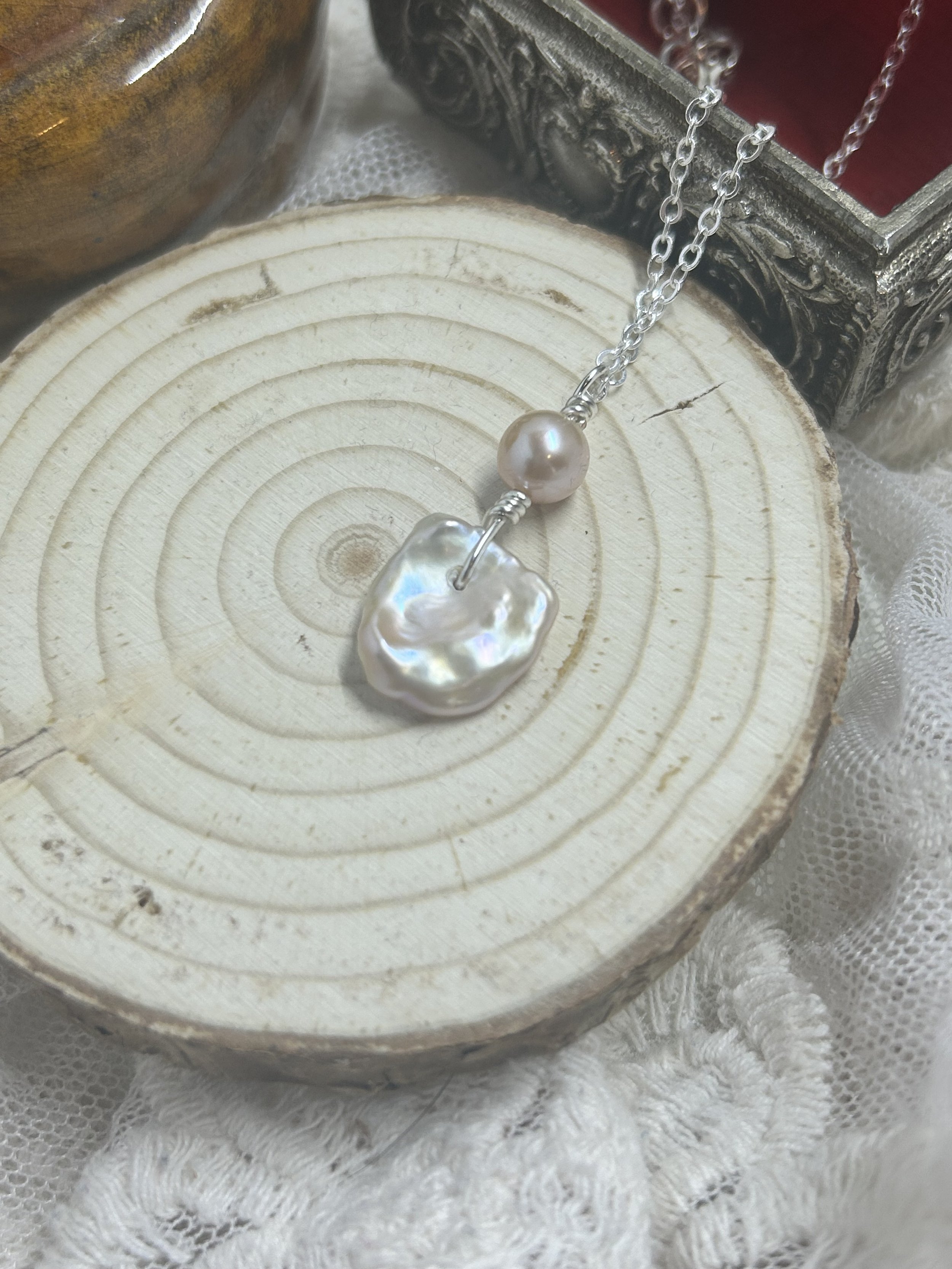
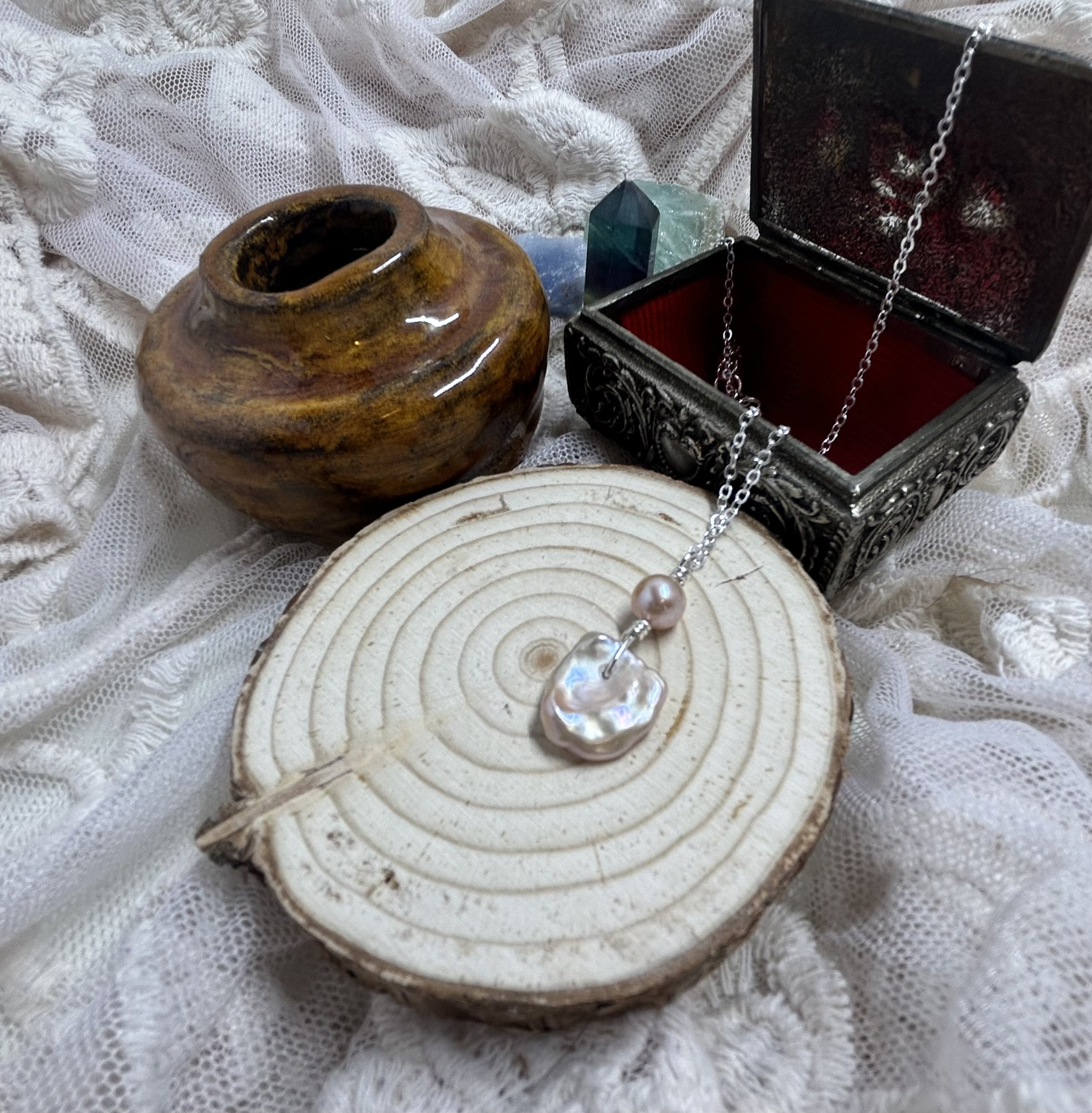
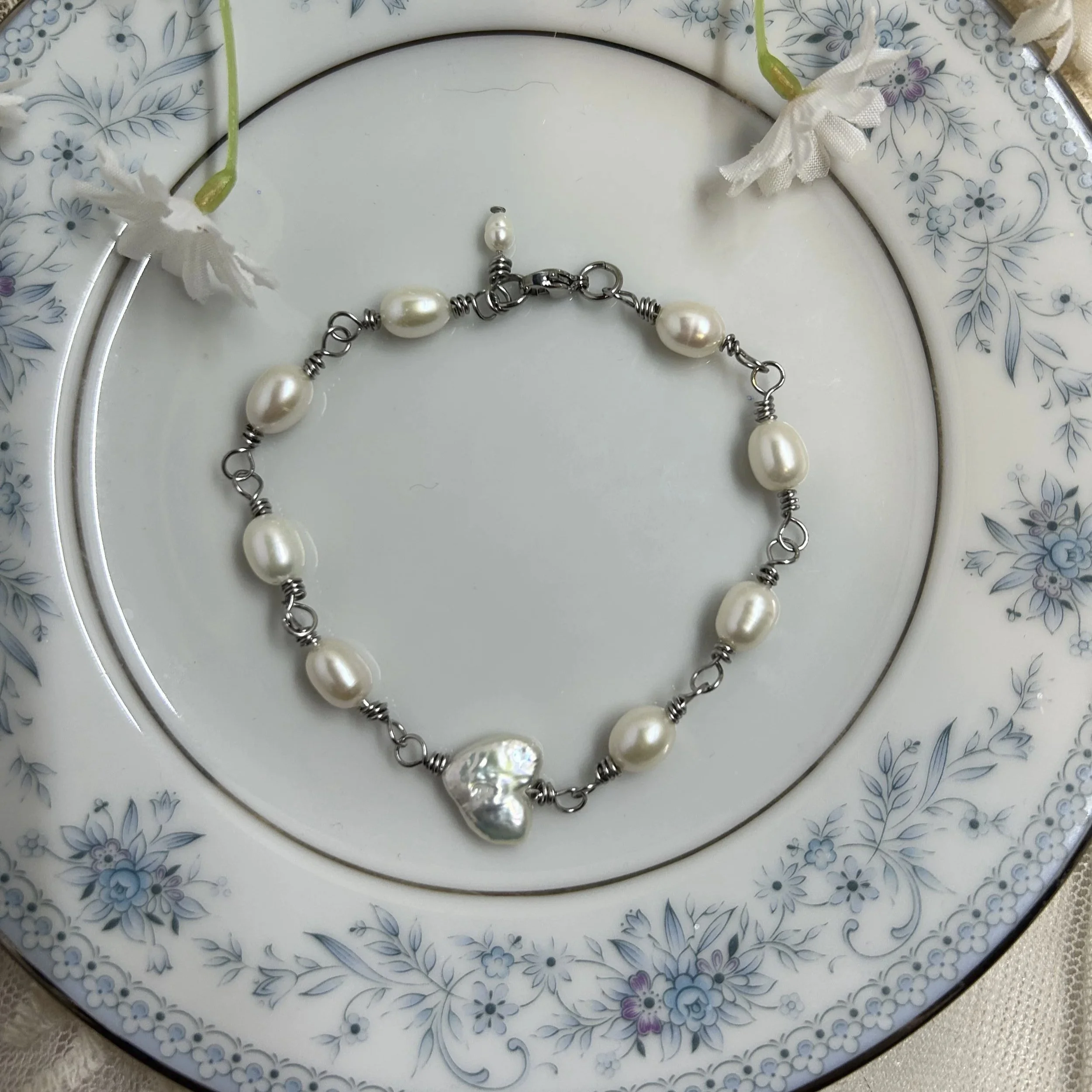 Image 2 of 2
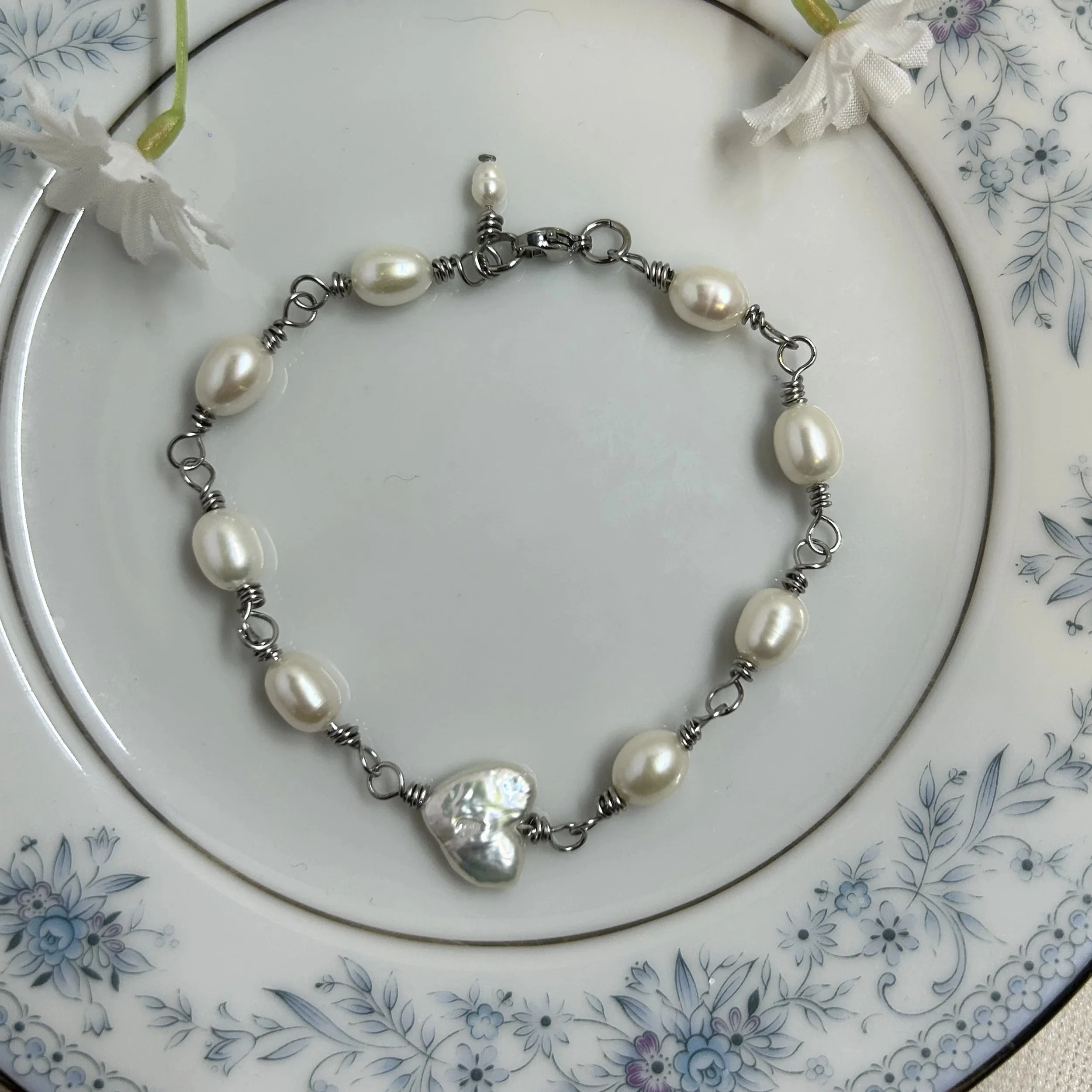
Stone: Freshwater Pearl
Wire Material: Stainless Steel
Size: 7” (please note that bracelets are adjustable and can be made tighter. If you need a bracelet larger than 7”, please fill out the form on my contact page)
A pearl forms around any kind of irritant inside of a clam. Irritants can include things like grains of sand and fragments of shell. Heart pearls are cultured pearls, meaning that the production of them is human-aided. People insert heart-shaped seeds (or irritants) carved from shell and the clam coats it in nacre, forming a pearl around the heart. The color of a pearl is determined by the DNA of the clam, the temperature of the water, and the minerals in the water. Pearls naturally come in a variety of colors like white, pink, purple, cream, rose gold, champagne, and other rarer colors.
Jewelry Care Tips:
Stainless steel jewelry can get wet, but avoid water with other substances (like chlorine or salt) in it
Take off jewelry when sleeping.
Take off jewelry when doing physical activity or labor.
Avoid wearing jewelry in the spa or any humid and hot environment.
If jewelry gets dirty, clean it (instructions below).
How to clean jewelry:
Use warm water and a dish soap that doesn’t contain any harsh chemicals (Dawn dish soap is recommended).
Avoid chemical cleaning products that aren’t specifically for jewelry.
Use a bowl of water to rinse soap or jewelry cleaner off of jewelry. (Rinsing jewelry over the sink is not recommended because small parts like earring backs may fall down the drain.)
Use a soft cloth or brush to avoid scratching the jewelry.
Stone: Freshwater Pearl
Wire Material: Stainless Steel
Size: 7” (please note that bracelets are adjustable and can be made tighter. If you need a bracelet larger than 7”, please fill out the form on my contact page)
A pearl forms around any kind of irritant inside of a clam. Irritants can include things like grains of sand and fragments of shell. Heart pearls are cultured pearls, meaning that the production of them is human-aided. People insert heart-shaped seeds (or irritants) carved from shell and the clam coats it in nacre, forming a pearl around the heart. The color of a pearl is determined by the DNA of the clam, the temperature of the water, and the minerals in the water. Pearls naturally come in a variety of colors like white, pink, purple, cream, rose gold, champagne, and other rarer colors.
Jewelry Care Tips:
Stainless steel jewelry can get wet, but avoid water with other substances (like chlorine or salt) in it
Take off jewelry when sleeping.
Take off jewelry when doing physical activity or labor.
Avoid wearing jewelry in the spa or any humid and hot environment.
If jewelry gets dirty, clean it (instructions below).
How to clean jewelry:
Use warm water and a dish soap that doesn’t contain any harsh chemicals (Dawn dish soap is recommended).
Avoid chemical cleaning products that aren’t specifically for jewelry.
Use a bowl of water to rinse soap or jewelry cleaner off of jewelry. (Rinsing jewelry over the sink is not recommended because small parts like earring backs may fall down the drain.)
Use a soft cloth or brush to avoid scratching the jewelry.